

Email us now!
 English
 Український
With rapid technological advancements, drones have long ceased to be exclusive tools for professional fields. Instead, they have become commonplace in households, serving as new companions for many to document life and explore fresh perspectives. However, every moment of flight must unfold within the framework of the law. Effective January 1, 2026, the newly revised Public Security Administration Punishment Law of the People's Republic of China will take full effect, significantly strengthening oversight of unauthorized drone operations. To ensure every pilot can enjoy flying while safeguarding public safety, please keep this comprehensive drone safety guide handy.
Legal Red Line: Every takeoff must be grounded in law.
The operation of drones is by no means a trivial matter that can be left unregulated. The Public Security Administration Punishment Law of the People's Republic of China, together with the Interim Regulations on the Management of Unmanned Aircraft System Operations and other relevant laws and regulations, collectively establish a comprehensive management system encompassing “pre-flight authorization, in-flight supervision, and post-incident accountability.” This means that every flight, from takeoff to landing, must be conducted within the bounds of the law, ensuring that “all flights are conducted in accordance with the law, and violations will be held accountable.”
Understanding What Constitutes “Black Flight”
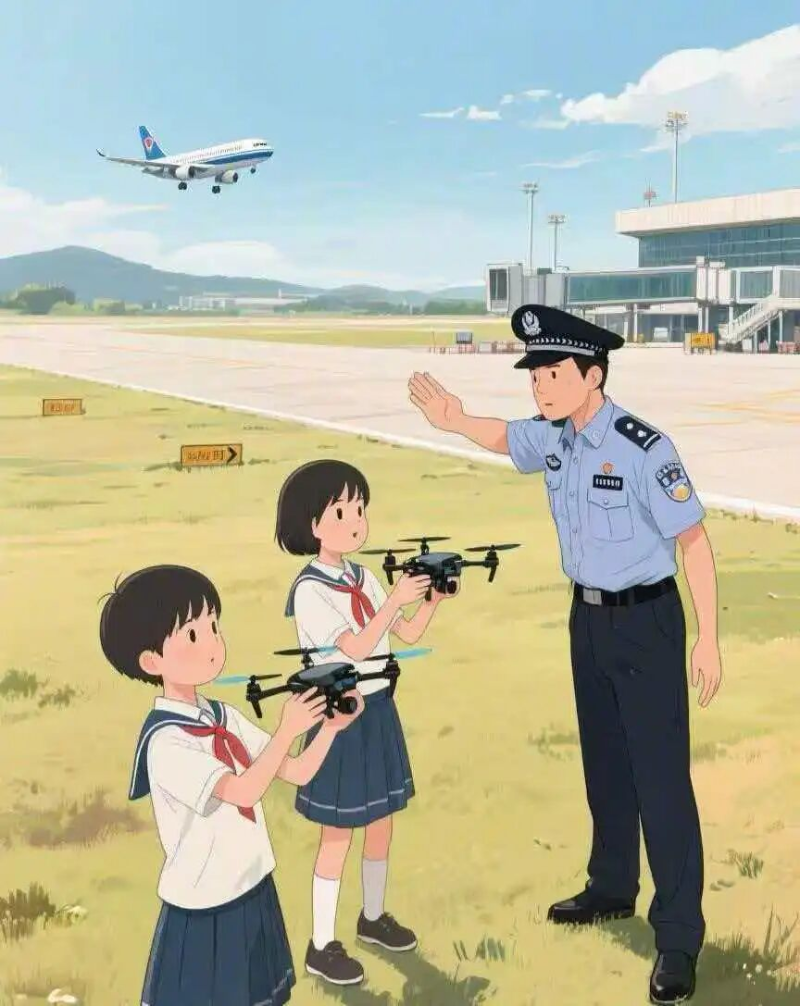
“Black flight” is the colloquial term for unauthorized drone operations, referring to any flight activity that violates national regulations on airspace management, aviation administration, public security, and related laws. Simply put, any flight lacking legal authorization or exceeding regulatory restrictions qualifies as “black flight.” It is not only an illegal operation but also a threat to public safety and airspace order.
Compliance Guide: Three Steps to Fly with Confidence
To become a responsible, law-abiding drone operator, be sure to follow these three steps:
1. Real-Name Registration with Verification
All civil drones, regardless of size or model, must complete real-name registration on the Civil Unmanned Aerial Vehicle Integrated Management Platform (UOM) (website: https://uom.caac.gov.cn) and affix the generated registration QR code to the drone's body. During flight operations, this registration information must be readily available for inspection. Flying without real-name registration constitutes illegal operation.
2. Verify Airspace Before Takeoff
Before flying, always check the airspace attributes of your planned flight area via the UOM platform:
Permitted Airspace: Typically non-sensitive areas below 120 meters true altitude, where micro and light drones may fly according to regulations.
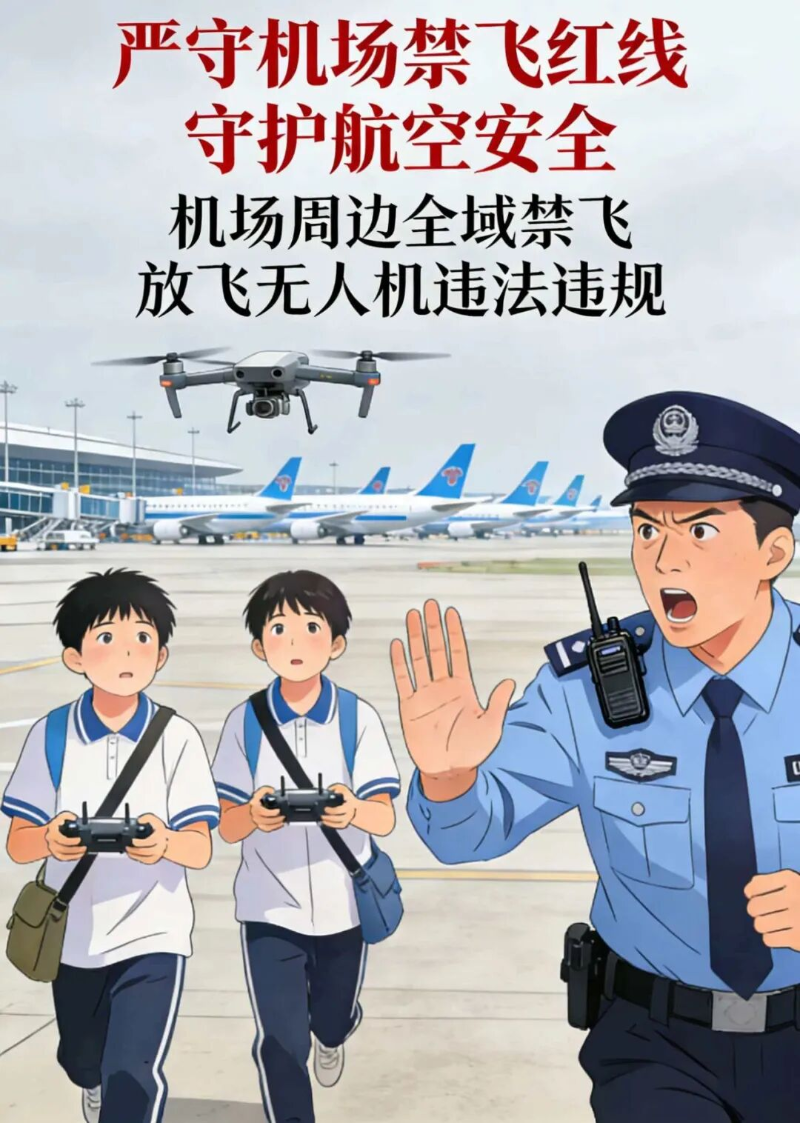
Controlled Airspace: Includes areas above 120 meters true altitude, airport perimeters, military zones, government facilities, train stations, densely populated areas, etc. Flying in these zones requires prior approval from air traffic control authorities.
Quick Tip: What is “true altitude”?
This refers to the vertical distance between the drone and its direct vertical projection point on the ground—commonly known as “ground clearance.”
3. Compliance with Personnel and Conduct Standards
Personnel Requirements: Persons without full civil capacity (e.g., young children) may only operate micro drones and must be supervised on-site by a person with full civil capacity. Persons with limited civil capacity (e.g., minors aged eight or older) may operate light drones but also require supervision.
Conduct Standards: Do not transport hazardous materials; do not fly over densely populated areas; do not engage in illegal filming; do not operate under the influence of alcohol; do not modify equipment without authorization; do not disseminate illegal or harmful information via drones.
Legal Consequences: The Sky Is Not Beyond the Law
Violating flight regulations is not only dangerous but also subject to severe legal penalties. From administrative sanctions to criminal liability, the costs may far exceed your expectations:
Endangering Public Safety: If illegal flights cause major accidents resulting in serious injury, death, or significant loss of public or private property, offenders may face imprisonment of ten years or more, life imprisonment, or even the death penalty.
Illegal Acquisition of State Secrets: Unauthorized filming of sensitive areas such as military facilities or key government institutions may constitute this crime.
Violation of Personal Information/Privacy Rights: Using drones to secretly film others' private lives may also violate criminal law.
Additionally, regulations like the Public Security Administration Punishment Law explicitly stipulate: Illegal flights in no-fly zones, around airports, or in sensitive areas will result in administrative penalties including fines and detention. Serious cases may also face criminal prosecution.
Zhuji Police solemnly remind:
All drones without real-name registration are strictly prohibited from flying. All drones without approval are strictly prohibited from flying in controlled airspace.
Every drone operator should consciously resist illegal flights, strictly comply with laws and regulations, and ensure real-name registration, civilized operation, and safe flight. Only through our collective efforts can we keep this sky clear, free, and peaceful.
Let us start with ourselves—by flying responsibly, safeguarding public safety, and protecting the blue skies above us!